
Third Person Point of View in Storyboarding and Scriptwriting
The third person point of view is the foundation of professional visual storytelling. In filmmaking, this narrative style allows writers, directors, and storyboard artists to describe scenes clearly, objectively, and visually. Because films are seen from the outside, the third person perspective aligns perfectly with how stories are translated from script to screen.
From screenplays to storyboards, the 3rd person point of view ensures consistency, collaboration, and cinematic clarity throughout the production process.
What Is Third Person Point of View?
The third person point of view describes characters and events using “he,” “she,” “they,” or character names, rather than “I” or “you.”
Example:
Sarah steps into the frame, glancing over her shoulder before closing the door.
This approach allows scenes to be written as they will appear on camera—making it ideal for movies, TV shows, and visual pitches.
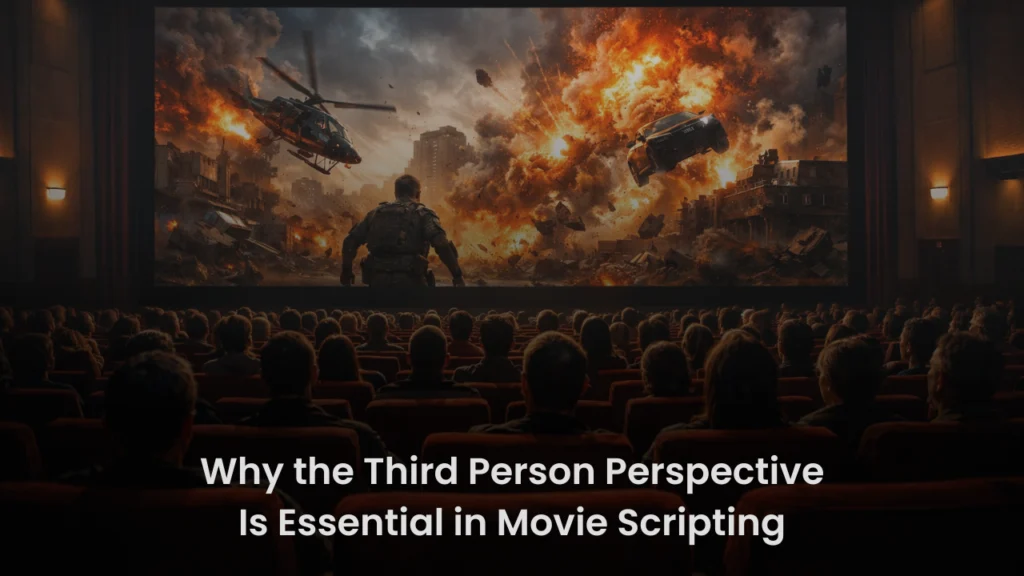
Why the Third Person Perspective Is Essential in Movie Scripting
1. Aligns With Visual Storytelling
Films show actions, not thoughts. The third person perspective focuses on what the audience can see and hear, making scripts easier to direct and shoot.
2. Improves Script-to-Storyboard Conversion
Storyboard artists rely on clear, observable actions. Third person narration translates directly into frames, camera angles, and shot sequences.
3. Supports Team Collaboration
A screenplay written in third person can be interpreted consistently by directors, cinematographers, editors, and VFX teams.
4. Keeps Scenes Cinematic and Neutral
The 3rd person point of view avoids subjective narration and keeps the focus on performance, movement, and environment.
Importance of Third Person Point of View in Storyboarding
Digital storyboarding is a visual breakdown of a script. Each panel represents what the camera sees, not what a character feels internally. That is why the third person point of view is the industry standard.
Storyboard-friendly description:
The camera pans as Jake crosses the room. He stops at the window, silhouetted against the city lights.
This style clearly communicates:
- Character placement
- Camera movement
- Visual mood
- Scene pacing
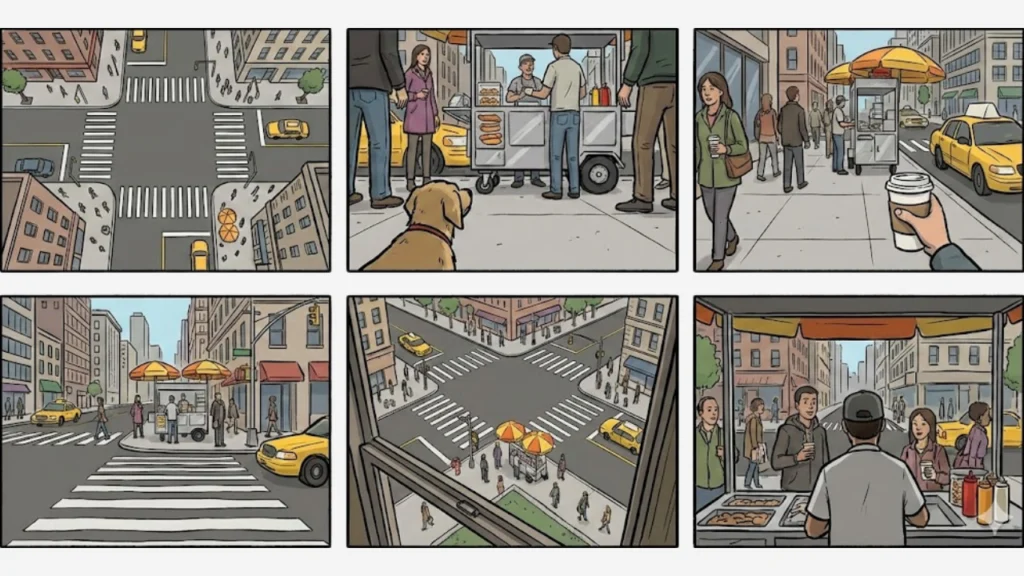
Same Scene Explained Using Different Points of View
To understand the value of the third person POV, here is the same scene written three different ways.
Scene Context
A character enters an abandoned house at night.
First-Person Point of View
I open the door slowly. My heart starts racing as I step inside, feeling like something is wrong.
Limitation
First person focuses on inner feelings, which are difficult to visualize and storyboard.
Second Person Point of View
You open the door and step into the dark house. You hesitate, sensing danger around you.
Limitation
Second person addresses the audience directly and is rarely used in traditional filmmaking.
Third Person Point of View
Mark opens the door and steps into the dark house. He pauses, scanning the room before moving forward.
Why it works best:
- Fully visual
- Easy to storyboard
- Matches how scenes are filmed
- Industry-standard for scripts
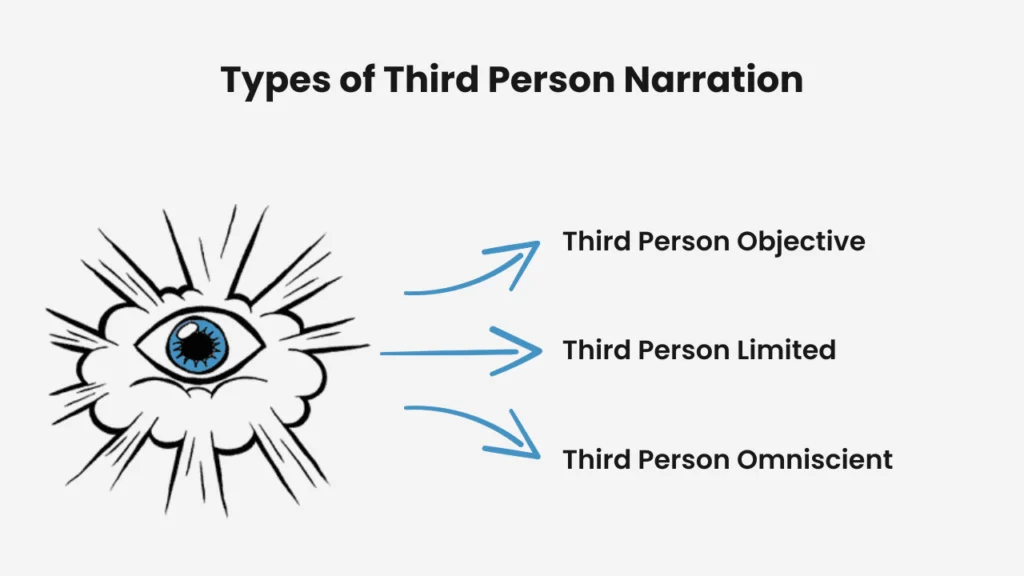
Types of Third Person Narration
Understanding the types of third person narration helps filmmakers choose the right storytelling depth.
1. Third Person Objective
Describes only visible actions and dialogue.
Best for: Screenplays and storyboards.
2. Third Person Limited
Follows one character closely but stays external.
Best for: Character-driven films.
3. Third Person Omniscient
Explores multiple characters’ perspectives.
Best for: Complex narratives and ensemble stories.
These are the main types of third person POV used across film and visual storytelling.
How Third Person POV Enhances Cinematic Writing
- Encourages “show, don’t tell” storytelling
- Helps writers think in shots and sequences
- Makes scripts production-ready
- Improves pitching clarity using storyboards
The third person point of view transforms ideas into visuals—making it essential for modern filmmaking.
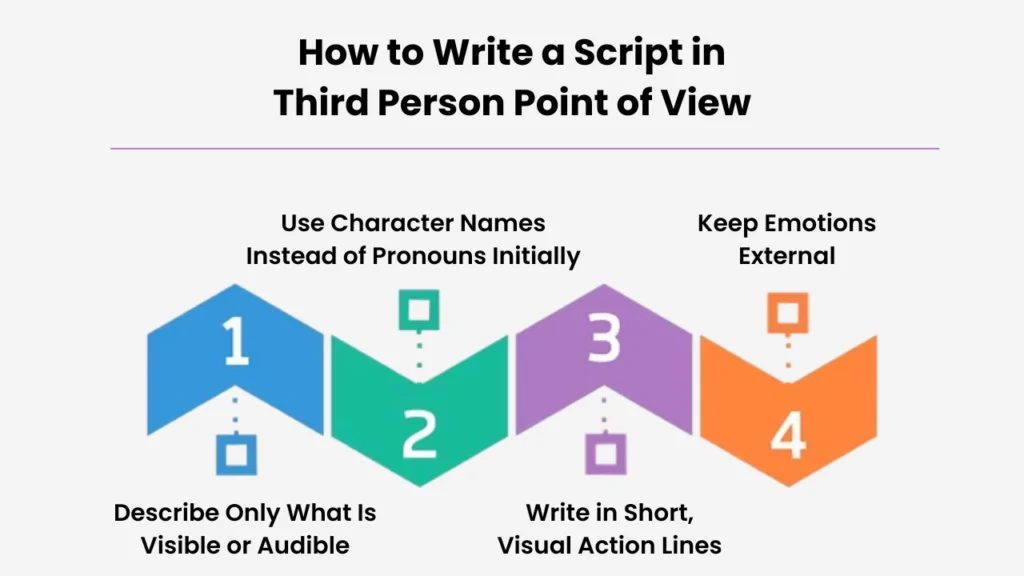
How to Write a Script in Third Person Point of View
A film script describes what the camera can see and hear. Third person narration supports this by focusing on action, movement, and dialogue.
Step 1: Describe Only What Is Visible or Audible
Scripts should avoid internal thoughts and focus on observable behavior.
Incorrect (first person)
I feel nervous as I enter the room.
Correct (third person)
John hesitates at the doorway, his hands shaking slightly.
Step 2: Use Character Names Instead of Pronouns Initially
Introducing characters clearly is essential.
Example:
Emma steps into the frame, scanning the empty hallway.
Once established, pronouns like “he” or “she” can be used naturally.
Step 3: Write in Short, Visual Action Lines
Third person scripts use concise sentences that translate easily into shots.
Example:
The door creaks open. Mark steps inside.
This pacing helps directors and storyboard artists visualize the scene accurately.
Step 4: Keep Emotions External
Instead of naming emotions, show them through actions.
He is afraid
He backs away, tightening his grip on the flashlight
Sample Script Scene (Third Person POV)
INT. ABANDONED HOUSE – NIGHT Daniel pushes the door open. The hinges groan. He steps inside, scanning the shadows. A sound upstairs makes him freeze. |
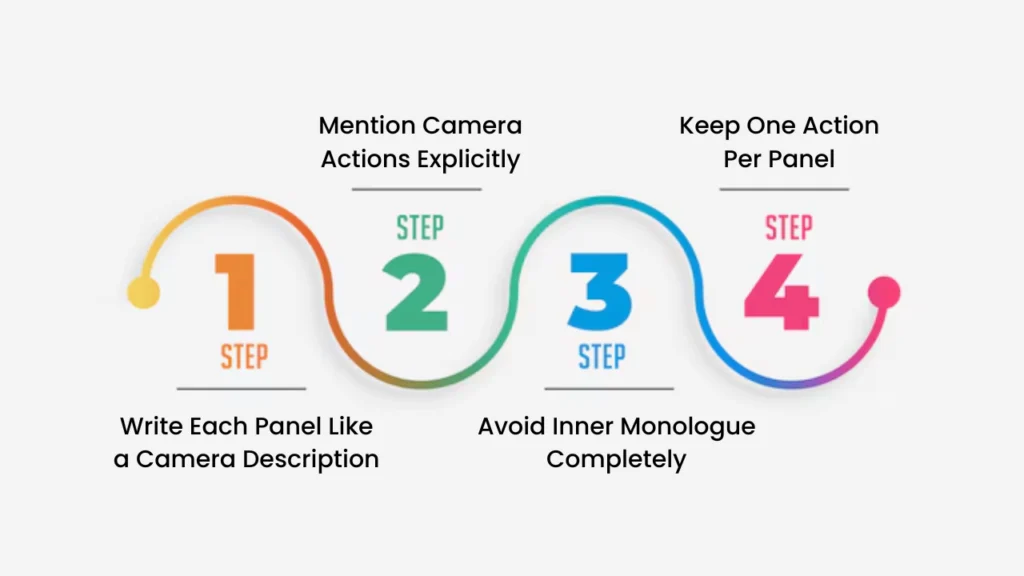
How to Write Storyboarding in Third Person Point of View
AI Storyboard converts the script into visual frames. Each panel represents what the camera sees, making third person narration essential.
Step 1: Write Each Panel Like a Camera Description
Storyboard notes should describe:
- Character action
- Camera movement
- Framing
Example:
Wide shot: Sarah enters the room from the left.
Step 2: Mention Camera Actions Explicitly
Third person POV allows neutral camera descriptions.
Examples:
- The camera pans across the room.
- A close-up reveals his reaction.
Step 3: Keep One Action Per Panel
Each storyboard frame should focus on a single visual moment.
Example:
Panel 1: The door opens slowly.
Panel 2: Mark steps inside, silhouetted by the light.
Step 4: Avoid Inner Monologue Completely
Storyboards represent visuals, not thoughts.
Avoid:
She feels scared.
Use:
She steps back, eyes wide, breathing shallow.
Script vs Storyboard: Third Person Writing Comparison
| Element | Script (Third Person) | Storyboard (Third Person) |
|---|---|---|
| Focus | Action + Dialogue | Visual framing |
| Language | Descriptive | Technical & visual |
| POV | Objective | Camera-based |
| Emotion | Shown through action | Shown through visuals |
Same Scene: Script vs Storyboard (Third Person POV)
Script Version
Alex enters the room and stops near the window. He listens. Silence.
Storyboard Version
- Panel 1
Wide shot: Alex enters the room.
- Panel 2
Medium shot: He stops near the window.
- Panel 3
Close-up: His eyes shift toward the door.
This demonstrates how third person writing transitions naturally from script to storyboard.
Frequently Asked Questions: Third Person Point of View
What is third person point of view in filmmaking?
The third person point of view describes characters using “he,” “she,” “they,” or names, focusing on visible actions rather than inner thoughts.
Why is third person POV used in movie scripts?
Third person POV matches how films are shot, making scripts clear, visual, and easy for directors and storyboard artists to interpret.
How does third person perspective help in storyboarding?
The third person perspective allows storyboard panels to show camera angles, character movement, and framing without subjective narration.
Is third person better than first person for screenwriting?
Yes. Third person is the industry standard because it translates directly into visuals, while first person relies on internal emotions.
Can storyboards be written in first person?
They can, but it is not recommended. Storyboards require objective, camera-based descriptions that work best in third person POV.
What are the types of third person narration?
The main types of third person narration are third person objective, third person limited, and third person omniscient.
Which type of third person POV is best for scripts?
Third person objective is best for scripts because it focuses only on what can be seen and heard on screen.
How do you write emotions in third person scripts?
Emotions are shown through actions, body language, and dialogue instead of being directly stated.
Does third person POV help in visual storytelling?
Yes. The 3rd person point of view encourages “show, don’t tell,” making scenes more cinematic and storyboard-friendly.
Is third person POV required for professional screenplays?
Yes. Almost all professional screenplays and storyboards are written using third person POV.
