
Storyboard Examples: Animation, Games, Movies & Ads
If you’re planning a film, animation, ad, or game cinematic, the first step is always the same—a storyboard. Storyboards translate ideas into visual frames so teams can align on direction, pacing, and camera flow before production begins.
In 2025, storyboards are more important than ever. With AI tools, virtual production, and cross-platform storytelling, creators now need clear visual planning to maintain consistency, reduce revisions, and accelerate production.
Turn your concepts into compelling visuals using practical storyboarding examples, fresh storyboard ideas, and ready-to-use storyboard story ideas. Whether you’re creating ads, short films, animations, or social media videos, the right storyboarding tool helps you plan smarter and execute faster.
Create stunning storyboards that boost clarity, creativity, and production quality—every single time.
In this guide, you’ll find complete storyboard examples for:
- Animation
- 3D animation
- Game cinematics
- Gameplay cutscenes
- Movie/superhero scenes
- Advertising
- Explainer videos
Use these examples as inspiration, templates, or references while creating your next project.
Why Storyboards Matter in Modern Production
Whether you’re creating a 10-second ad or a full 3D film, AI Storyboard Generator helps you
Save Production Time
Mistakes become expensive once animation or shooting begins. Storyboards catch issues early.
Maintain Character & Scene Continuity
Especially in animations and superhero-style films, consistency is everything.
Improve Team Collaboration
Departments like animation, lighting, and editing work from the same visual plan.
Pitch Ideas to Clients
Storyboards clearly communicate creative concepts before investing in production.
Why Real Storyboard Examples Matter
Most creators learn storyboarding from beginner templates, but real professionals reference actual film and game storyboards because they show:
- How camera angles are chosen
- How motion is tracked
- How transitions and cuts are planned
- How emotional beats are visualized
- How VFX shots are prepared
- How action is choreographed
Learning from real examples gives you a director-level view of storytelling.
Real Storyboard Examples From Movies, Animation & Games
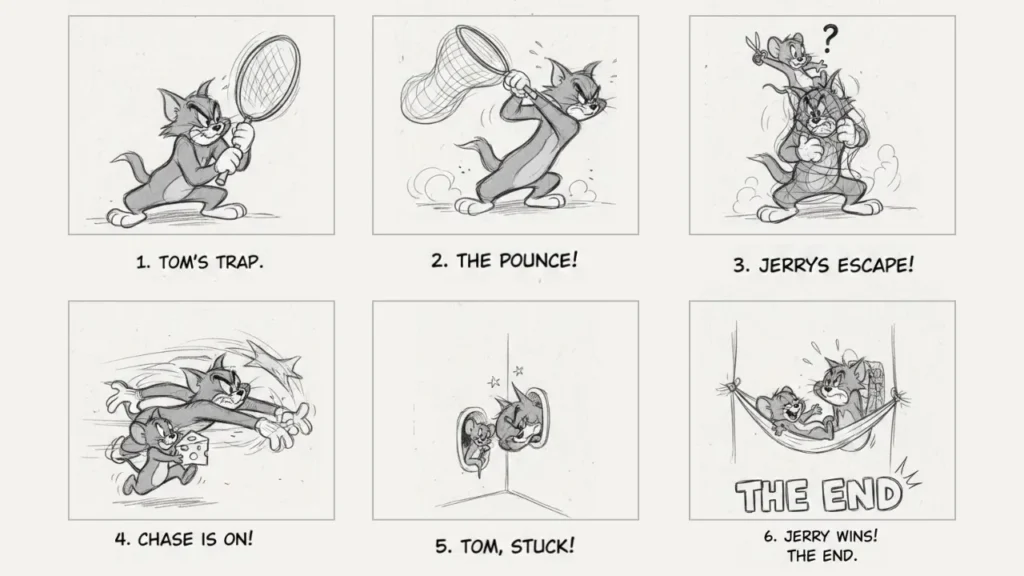
1. Tom & Jerry – Classic Chase Sequence (Animation)
Why this example is iconic:
Tom & Jerry mastered slapstick storytelling. Every chase sequence is planned through fast-paced, rhythm-based storyboards.
What the real storyboard includes:
- Jerry sneaking across the kitchen
- Tom waking up and spotting Jerry
- Sudden zoomed facial expressions
- Rapid cut transitions
- Tom crashing into walls, doors, furniture
- Final gag payoff
These boards show perfect timing — the secret to cartoon comedy.
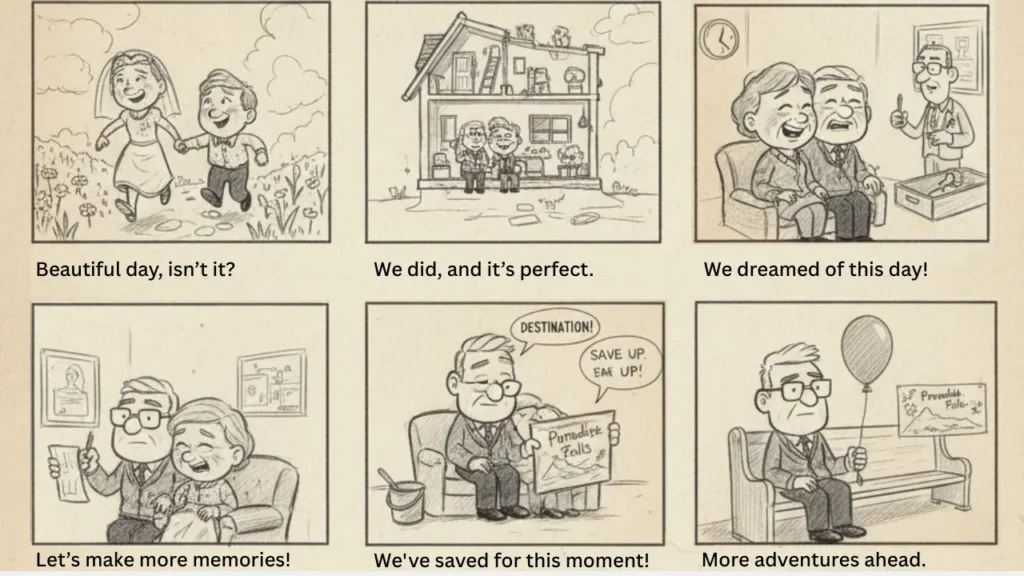
2. Pixar’s Up – The “Married Life” Montage
This is one of Pixar’s most emotional storyboard sequences.
Storyboard highlights:
- Carl and Ellie decorating their house
- Fixing their mailbox
- Trying to save money for their dream trip
- Hospital scenes
- Ellie’s farewell
The storyboard is designed with no dialogue, relying only on visuals and pacing — a masterclass in emotional storytelling.
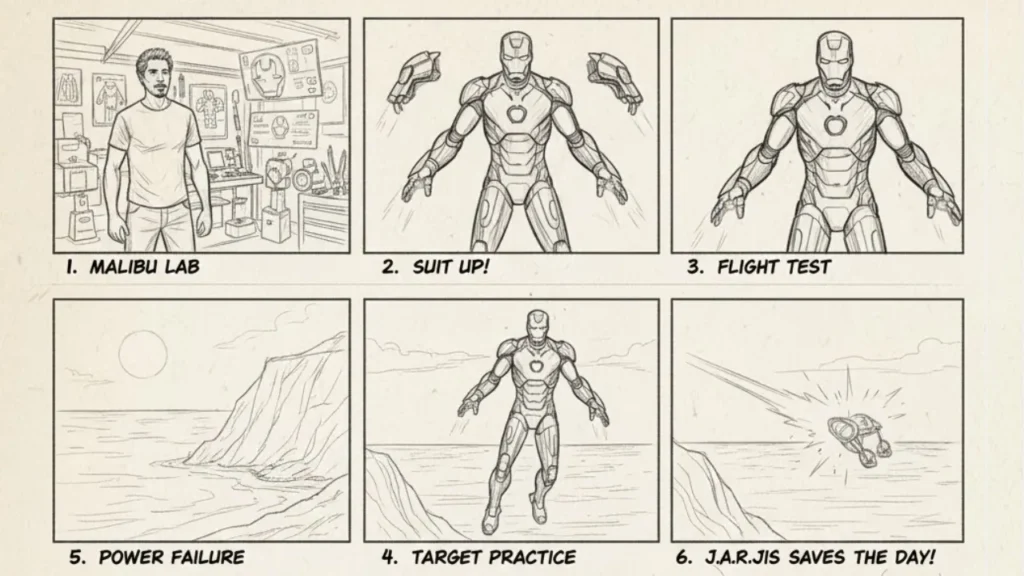
3. Iron Man (2008) – Mark II Suit Flight Test
Marvel relied heavily on storyboards for Iron Man’s first flight scene.
Storyboard elements include:
- Tony activating thrusters
- Hover test inside the lab
- Flying into the night sky
- Ice buildup at high altitude
- Crash landing into the ceiling
This storyboard also guided the VFX team on lighting, movement, and 3D positioning.
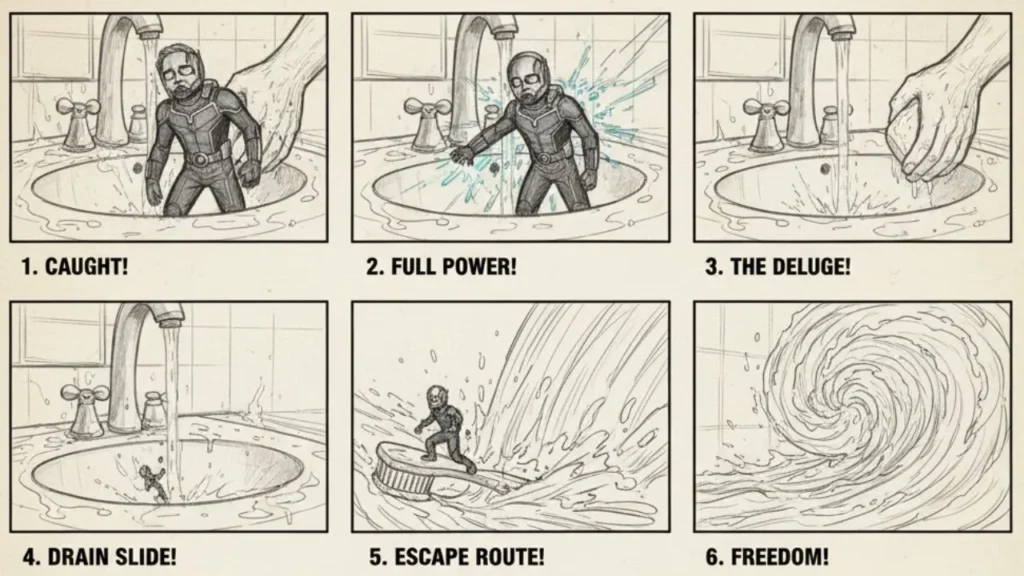
4. Ant-Man – Shrinking Bathroom Escape
The Ant-Man shrinking scenes were challenging, requiring detailed macro-world planning.
Storyboard details:
- Scott accidentally shrinking in the bathtub
- From his POV, water becomes a giant wave
- Running across tile cracks
- Falling between pipe gaps
- Escaping down the drain
This is a great example of scale switching in storyboarding.
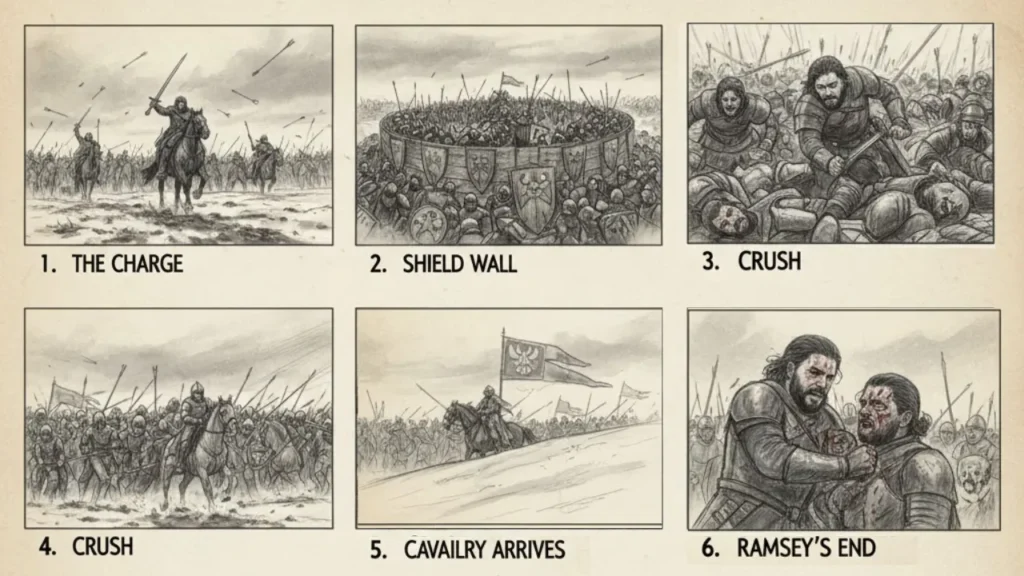
5. Game of Thrones – Battle of the Bastards (TV Series)
One of the most logistically complex battles on TV.
Storyboard breakdown:
- Jon Snow facing Ramsay’s cavalry
- Close-up tension shots
- Aerial view of collapsing armies
- Bodies piling up
- Suffocation scene inside the crowd
- Jon charging inside Winterfell
Storyboards ensured perfect alignment between CGI horses, extras, and stunts.
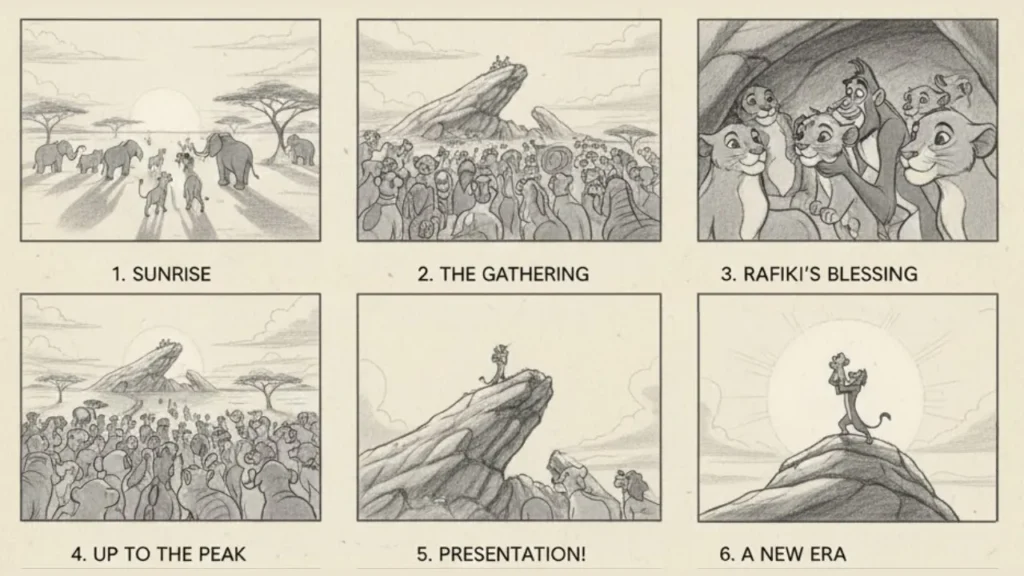
6. The Lion King (1994) – Simba’s Presentation Scene
This iconic Disney moment was storyboarded long before final animation.
Storyboard details:
- Rafiki raising Simba
- Crowd of animals bowing
- Sunlight breaking over Pride Rock
- Large cinematic wide shots
It’s a perfect lesson in using storyboards for scale, emotion, and musical timing.
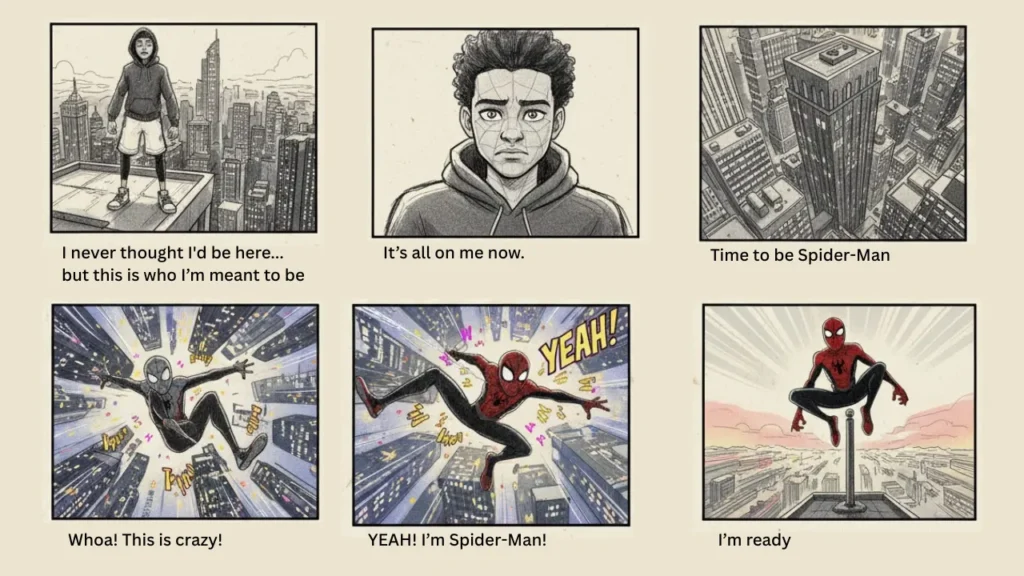
7. Spider-Man: Into the Spider-Verse – Leap of Faith Scene
One of the most visually stunning scenes in animation.
The storyboard includes:
- Miles hesitating on the rooftop
- Close-up emotional beats
- The jump frame
- Upside-down camera angle (falling looks like rising.)
- Quick cuts, neon lights, motion blur
A great example of style-driven cinematography.
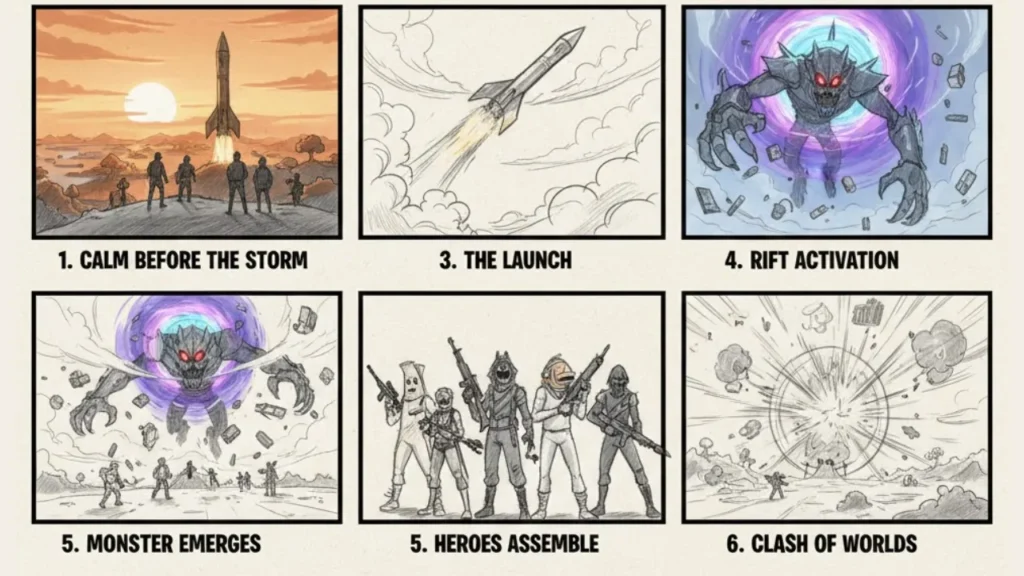
8. Fortnite – Cinematic Cutscene Storyboards (Game)
Epic Games uses storyboards for every cinematic.
Storyboard highlights:
- Players jumping from the Battle Bus
- Storm shrinking
- Loot drop highlights
- Fast-paced fight choreography
These boards guide both animators and level designers.
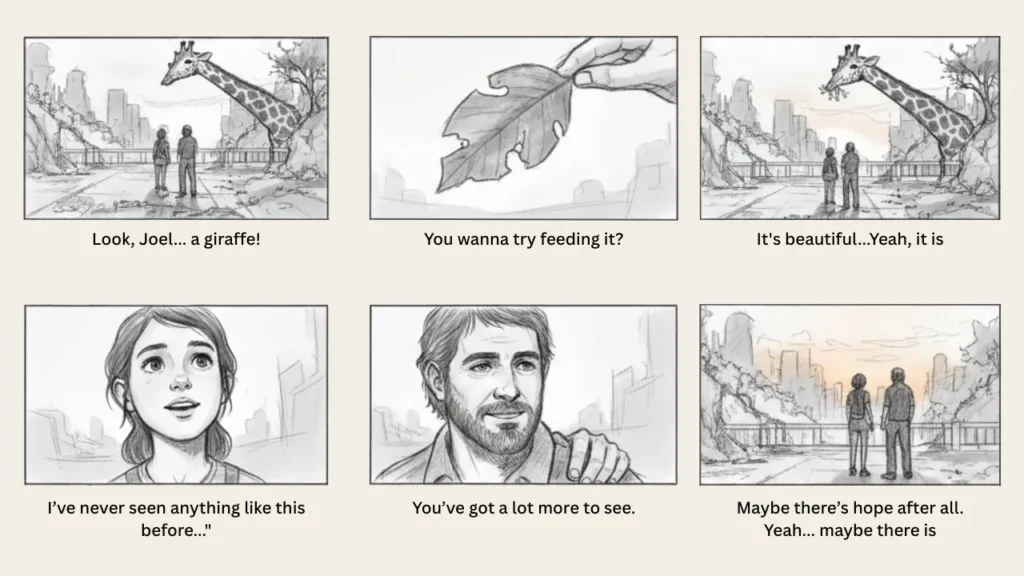
9. The Last of Us – Giraffe Scene (Game)
This emotional scene was storyboarded to ensure the pacing felt soft and slow.
Key elements:
- Joel and Ellie walking across bridge
- Giraffes appearing in the distance
- Close-up on Ellie’s amazement
- Soft lighting and quiet sound beats
A fantastic example of emotional pacing in game storytelling.
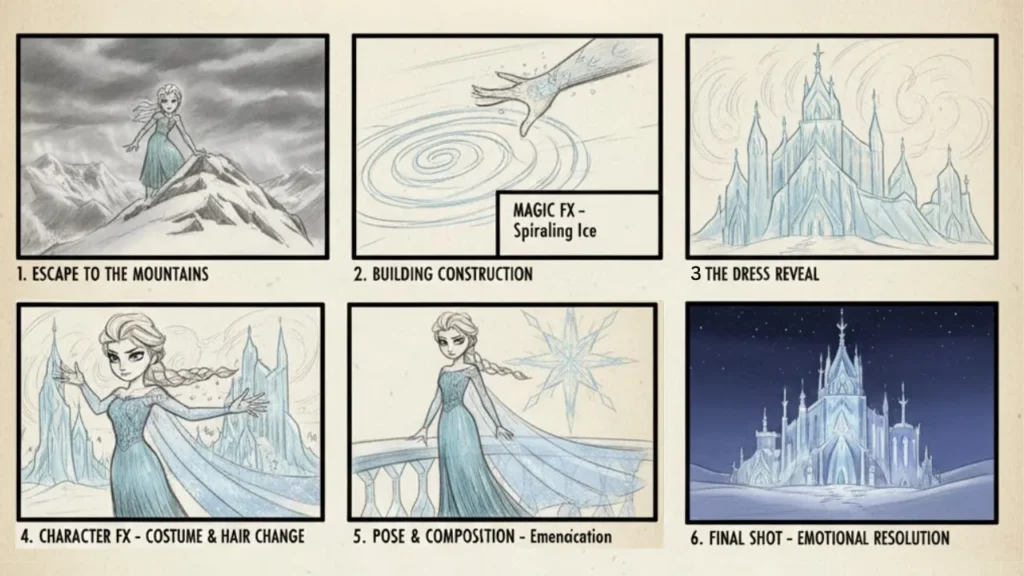
10. Frozen – Let It Go Transformation Scene
Elsa’s transformation is entirely storyboarded to match the song’s rhythm.
Storyboard snapshots:
- Elsa climbing the mountain
- Creating the ice floor
- Building the castle
- Dress transformation
- Final reveal at the balcony
Great for understanding musical-visual synchronization.
What You Can Learn From These Examples
These real storyboard examples show you how professionals handle:
Action choreography
Games like Fortnite and movies like Iron Man rely on timing and physical motion.
Emotional pacing
Pixar’s Up and The Last of Us show slow, thoughtful storyboarding.
Visual comedy
Tom & Jerry demonstrates exaggerated motion.
Cinematic composition
Game of Thrones and The Lion King use dramatic wide shots.
Style + VFX planning
Spider-Verse and Ant-Man required detailed boards for effects and transitions.
.
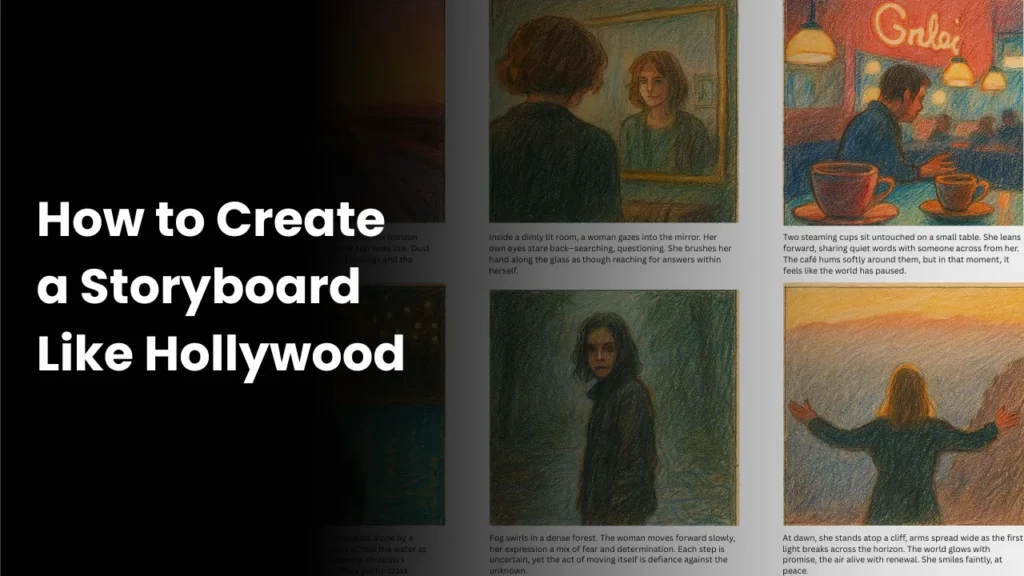
How to Create a Storyboard Like Hollywood (Step-by-Step)
Start with a script or outline
Even one paragraph is enough if it describes the scene.
Break it into key moments
Ask: What must the audience see?
Sketch rough frames
Stick figures are perfectly fine.
Add camera directions
Examples:
- Wide shot
- Close-up
- POV
- Tilt up
- Slow zoom
Add movement notes
- Character runs left
- Explosion behind
- Camera pans
- Lighting shift
Add audio notes
Dialogue, music beats, and sound effects.
Review pacing
Check if the sequence flows visually.
FAQs: Everything You Need to Know
What is a storyboard example?
A storyboard example is a sequence of illustrated frames that visually explain how a scene will unfold. These story boarding examples help creators plan shots, actions, and emotions before filming or animating.
How do movies use storyboard examples?
Movies use storyboard examples to map out camera angles, action sequences, lighting, and pacing. Directors rely on these frames to make complex scenes efficient and visually consistent.
What are some famous storyboard ideas from real films?
Popular storyboard ideas include Pixar’s Up montage, Iron Man’s flight test, Frozen’s “Let It Go,” and Game of Thrones battle scenes. These storyboard story ideas guide VFX, action, and emotional beats.
How do animators use storyboards in cartoons like Tom & Jerry?
Animators create fast-paced story boarding examples showing comedic timing, exaggerated motion, and visual gags. These frames ensure every punchline lands perfectly.
How are storyboards used in games like Fortnite or The Last of Us?
Game studios use storyboard examples to design cutscenes, character interactions, camera movement, and emotional storytelling moments — all before 3D animation begins.
What makes a good storyboard frame?
A strong frame clearly shows action, expression, camera direction, and environment. The best storyboard examples communicate emotion instantly with simple sketches.
How many frames should a typical storyboard have?
Most story boarding examples contain 6–20 frames per scene, but complex sequences like fights or musical numbers may use 30+ frames.
Can I create storyboards without drawing skills?
Yes. You can use AI tools, templates, or stick-figure storyboard ideas. Clarity matters more than artistic detail.
What tools are used to create storyboard examples?
Creators use software like Murphy, Storyboarder, Canva, Procreate, and AI storyboard generators to turn storyboard story ideas into clean frames.
How detailed should storyboards be for animation?
Animation needs detailed story boarding examples that show movement, transitions, timing, and character expressions. Even simple cartoons rely heavily on planned frames.
What is the purpose of storyboards in filmmaking?
Storyboards act as a visual blueprint. These storyboard examples ensure the director, cinematographer, and VFX team stay aligned during production.
What are different types of storyboard examples?
Common types include:
- Thumbnail storyboards
- Cinematic storyboards
- 3D previs frames
- Animated storyboards (animatics)
All are valid story boarding examples depending on your project.
Can AI generate storyboard ideas automatically?
Yes. AI can turn your script into visual storyboard ideas by generating characters, framing, and actions. This speeds up early planning.
What should be included in storyboards for ads or marketing videos?
Ad storyboarding examples include product shots, transitions, text overlays, and call-to-action frames. Clear messaging is key.
How do I come up with storyline-based storyboard story ideas?
Start with the emotion or message you want to convey. Then break it into moments — beginning, conflict, action, result. This process helps generate strong storyboard story ideas quickly.
