Synopsis Movies: The Complete Guide to Writing a Powerful Movie Synopsis

A movie synopsis is one of the most important documents in filmmaking, scriptwriting, and pre-production. Whether you’re pitching your script, submitting to a film festival, creating a portfolio, or helping audiences understand your story — your synopsis plays a massive role.
In this detailed guide, you’ll learn what is movie synopsis, how to write one, mistakes to avoid, real examples, templates, AI workflows with Murphy, and more.
What Is a Movie Synopsis?
Before we explore synopsis movies and techniques, let’s understand the meaning clearly.
A movie synopsis is a short, structured explanation of the story, including the main characters, central conflict, major turning points, and the ending. It does NOT include dialogue, scene descriptions, or unnecessary details.
It is a complete summary of the film written in a clear, easy-to-read format.
A strong synopsis answers:
- What happens in the story?
- Who are the main characters?
- What is the central conflict?
- What are the key turning points?
- How does the film end?
A synopsis gives readers (producers, judges, or audiences) a quick overview without reading the entire script.
Why Are Synopsis Movies Important?
A movie synopsis is essential for:
Pitching Scripts
Producers and studios don’t have time to read every script. A clean movie script synopsis helps them decide quickly.
Story Development
Writers use synopses to organize ideas before writing the full screenplay.
Film Festivals & Competitions
Nearly every submission requires a synopsis of movie in 150–300 words.
Marketing & Promotions
OTT platforms, websites, press kits, and brochures all use movie plot summaries.
Audience Understanding
A good summary helps viewers decide whether the film fits their taste.
Types of Movie Synopsis
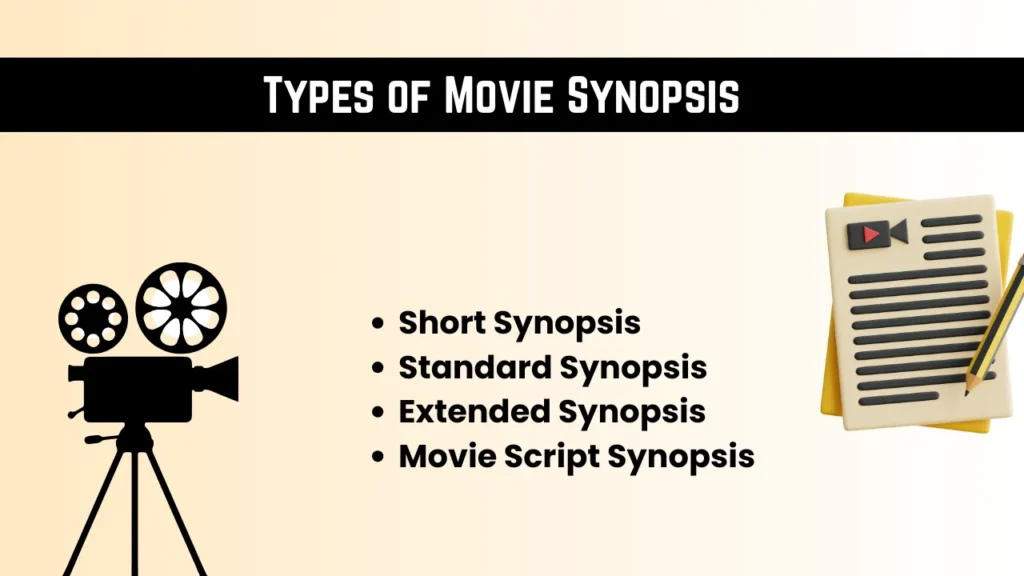
Different filmmaking stages require different types of synopses.
- Short Synopsis (Logline)
- 1–2 sentences
- Focuses on the story’s hook
- Used for quick pitches
- Standard Synopsis (150–250 Words)
This is the most common in synopsis movies and festival submissions.
- Extended Synopsis (400–700 Words)
A more detailed version including character arc and theme.
- Movie Script Synopsis (Professional Use)
A movie script synopsis includes:
- Key plot acts
- Character motivations
- Emotional tone
- Complete ending
Used by producers, directors, and script readers.
How to Write a Film Synopsis
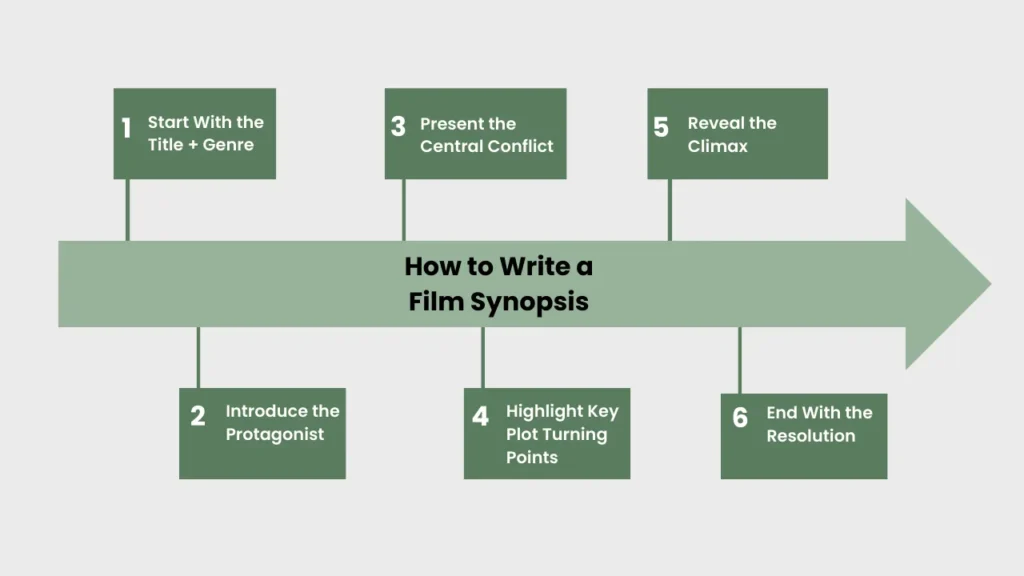
If you want to master how to write a film synopsis, follow these steps carefully:
Step 1: Start With the Title + Genre
Example:
A coming-of-age drama about a young musician trying to save his family.
Step 2: Introduce the Protagonist
Keep it short but descriptive:
- Name
- Age
- Personality
- Goal
Example:
“17-year-old Arjun, an introverted guitarist, dreams of leaving his small town.”
Step 3: Present the Central Conflict
This is the heart of your summary of the film.
Examples of conflict:
- A mystery to solve
- A villain to defeat
- A personal struggle
- A relationship challenge
Example:
“When his father falls ill, Arjun must choose between his dreams and family responsibilities.”
Step 4: Highlight Key Plot Turning Points
Include only IMPORTANT events.
Good turning points include:
- A betrayal
- A discovery
- A major challenge
- A big shift in the character’s journey
Step 5: Reveal the Climax
This is the peak of tension.
Step 6: End With the Resolution
A synopsis MUST reveal the ending.
A mystery without answers = rejected.
This is how professionals learn how to write a synopsis for a movie properly.
Structure of a Perfect Summary of the Film
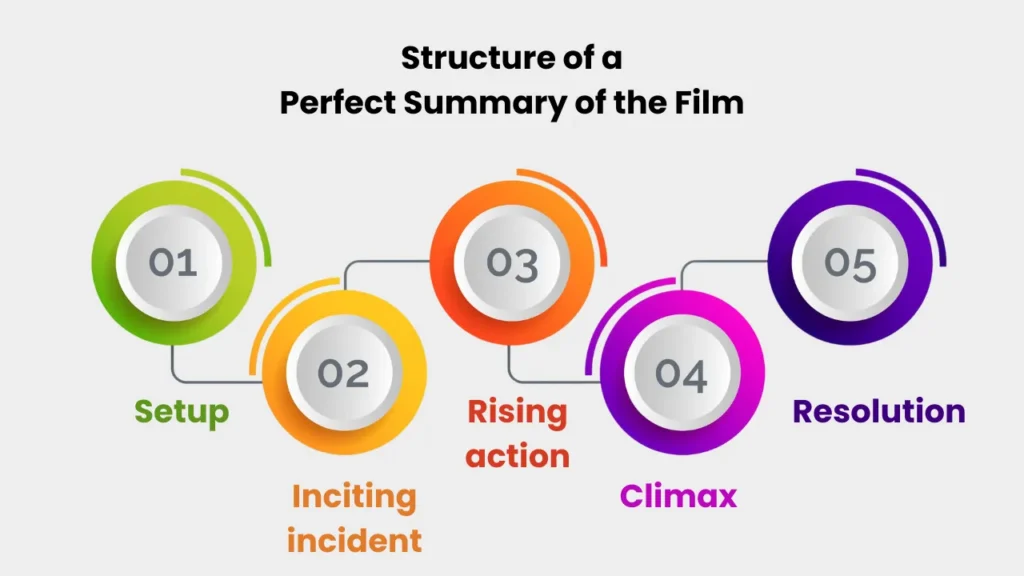
A strong synopsis follows this structure:
SETUP
Character background and world
INCITING INCIDENT
The moment everything changes
RISING ACTION
Obstacles + challenges
CLIMAX
Final conflict or turning point
RESOLUTION
How everything ends
This is the core of all high-quality movie plot summaries.
10 Examples of Movie Synopses
These clear examples help writers understand how synopsis movies should be written.
Action – Mad Max: Fury Road
In a desert wasteland, a loner teams up with a rebel woman to escape a tyrant, leading to a high-speed chase for freedom.
Thriller – Gone Girl
A man becomes the main suspect in his wife’s disappearance, revealing hidden secrets from their marriage.
Sci-Fi – Interstellar
A former pilot embarks on a space mission to save humanity while leaving behind his daughter on a dying Earth.
Romance – La La Land
Two artists fall in love while chasing their dreams, but ambition threatens to pull them apart.
Horror – The Conjuring
Paranormal investigators help a family haunted by a powerful dark entity.
Animation – Finding Nemo
A father fish travels across the ocean to rescue his missing son.
Comedy – Home Alone
A young boy defends his home from burglars after his family accidentally leaves him behind.
Fantasy – Harry Potter and the Sorcerer’s Stone
A young boy discovers he is a wizard and must stop an evil sorcerer from returning to power.
Disaster – San Andreas
A rescue pilot must save his family amid massive earthquakes.
Drama – The Pursuit of Happyness
A struggling salesman fights homelessness while raising his young son and pursuing a career.
These are excellent examples of polished synopsis movies.

Common Mistakes Writers Make (And How to Avoid Them)
Too long
Keep it 150–250 words unless requested otherwise.
Adding unnecessary details
No side characters unless essential.
Writing like a screenplay
No camera angles, no scenes.
Making it dramatic like a trailer
Trailers hide endings. Synopses don’t.
Not revealing the ending
One of the biggest reasons submissions are rejected.
Advantages of Writing a Strong Movie Synopsis
- Makes pitching easier
- Helps organize your story
- Reduces script rewriting
- Presents your film professionally
- Helps producers judge your idea quickly
- Useful for marketing & OTT listings
- Essential for film festival submissions
Disadvantages of Writing a Movie Synopsis
- It’s hard to compress a long story
- Emotional depth can get lost
- Some writers find summarizing difficult
- Risk of revealing too much
- May not reflect the full experience of the film
- But with practice and AI assistance, these problems can be reduced.

Why Every Strong Movie Synopsis Needs a Visual Storyboard Plan
A movie synopsis explains your story in words, but a visual storyboard plan shows how that story will look on screen. Turning your synopsis into a digital storyboard helps filmmakers check pacing, plot structure, and character flow before production begins.
Using tools like an AI storyboard generator or a film storyboard maker, you can quickly transform your summary of the film into shot-by-shot visuals. This helps reveal:
- Whether scenes are too fast or too slow
- If character emotions and arcs make sense
- Whether transitions and story beats are clear
- Any missing or unnecessary scenes
Storyboards also align the entire production team, ensuring everyone understands the same visual direction. By converting your synopsis into visuals early, you strengthen your final movie synopsis and make your story ready for real filmmaking.
How Murphy Helps You Write a Movie Synopsis Faster
Murphy is an AI-powered creative tool designed for filmmakers, writers, and content creators.
- Turns your script or idea into a movie synopsis
- Converts storyboards into movie plot summaries
- Suggests better structure, tone & clarity
- Generates multiple versions of synopsis
- Helps rewrite long summaries into short formats
- Saves hours of manual writing
- Creates short, standard, and extended synopses instantly
Whether you’re writing for YouTube films, short films, OTT pitches, or feature films, Murphy helps deliver professional-grade synopsis movies effortlessly.
FAQs about Synopsis Of the Movies
1. What is a movie synopsis?
A movie synopsis is a short, structured summary of the film that explains the main characters, the central conflict, key plot events, and the ending.
2. How long should a movie synopsis be?
A standard movie synopsis is usually 150–250 words, but some submissions may ask for 300–500 words for an extended version.
3. Should a movie synopsis include the ending?
Yes. A synopsis must reveal the ending because it is meant for producers, judges, and professionals—not the audience.
4. What should a film synopsis include?
It should include the protagonist, setting, main conflict, rising action, climax, and the complete resolution.
5. What is the difference between a movie synopsis and a film summary?
A movie synopsis is structured and reveals the ending, while a summary is more general and may not include the full plot or resolution.
6. How do I write a film synopsis?
Start with the protagonist, present the conflict, highlight key events, build to the climax, and end with the resolution—written in one continuous paragraph.
7. What is a movie script synopsis?
A movie script synopsis is a detailed summary used in screenwriting that covers major plot points, character motivations, and the story’s complete arc.
8. How many versions of a movie synopsis can I write?
You can write a logline, a short synopsis, a standard synopsis, and an extended synopsis depending on where you are submitting it.
9. Should a movie synopsis mention side characters?
Only if they directly affect the main plot. Avoid unnecessary characters that complicate the summary.
10. Can I write multiple synopses for a single movie?
Yes. Many writers prepare different versions for different purposes—festivals, producers, pitch decks, and websites.
11. Do movie synopses include dialogue?
No. A synopsis should not include dialogue, scene descriptions, or camera instructions.
12. Why do producers ask for a movie synopsis?
A synopsis helps them quickly understand the story, themes, and commercial potential without reading the entire script.
13. How can AI tools like Murphy help with movie synopses?
AI tools like Murphy can instantly turn story ideas, scripts, or storyboards into clean, structured movie plot summaries, saving time and improving clarity.

