Film Marketing Strategies: A Complete Guide to Film Promotion and Marketing
In today’s competitive entertainment industry, creating a great film is only half the battle. The real challenge lies in making sure the right audience knows about it, connects with it, and feels excited enough to watch it. This is where film marketing strategies play a critical role. From building early buzz to sustaining audience interest after release, effective film promotion and marketing can determine whether a movie becomes a hit or fades into obscurity.
This in-depth guide explores modern film marketing techniques, practical film advertising methods, and proven approaches to film promotion and marketing that work across theaters, OTT platforms, and digital channels.
What Are Film Marketing Strategies?
Film marketing strategies refer to the planned activities used to promote a movie to its target audience. These strategies combine creativity, storytelling, psychology, and data-driven decision-making to maximize reach, engagement, and revenue.
The main goals of film marketing include:
- Creating awareness before release
- Building emotional connection with audiences
- Driving ticket sales or streaming views
- Strengthening the film’s brand and long-term value
Unlike traditional advertising, modern film marketing focuses heavily on digital platforms, audience behavior, and community-driven promotion.
Why Film Promotion and Marketing Are Essential
No matter how strong a film’s story or cast is, poor marketing can limit its success. Strategic film promotion and marketing help films stand out in a crowded marketplace.
Key benefits include:
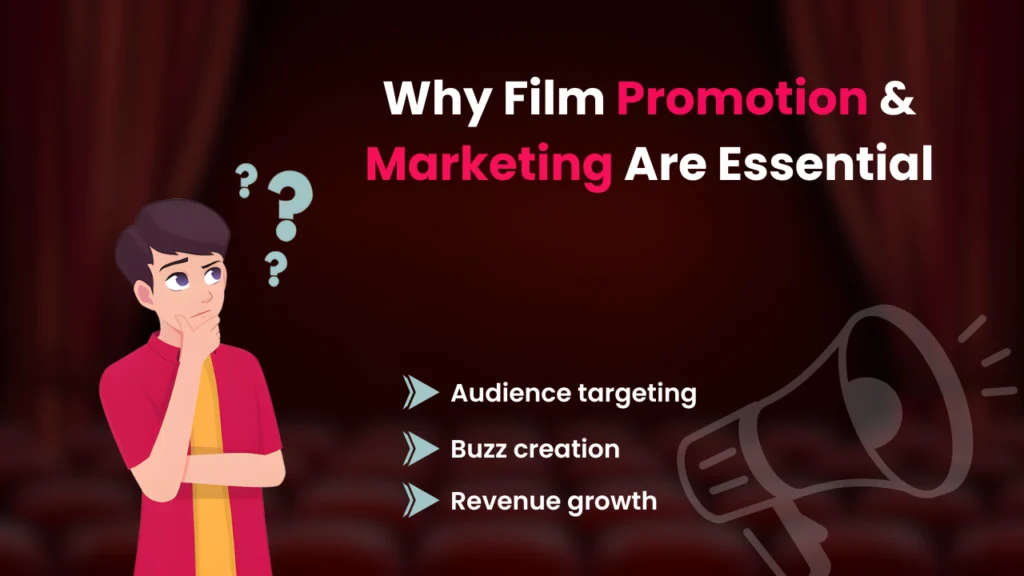
- Audience targeting: Reaching viewers most likely to enjoy the film
- Buzz creation: Generating conversations and anticipation
- Revenue growth: Improving box office and OTT performance
- Brand building: Establishing credibility for filmmakers and production houses
In the age of streaming and social media, attention spans are short. Smart film marketing techniques ensure your movie captures attention quickly and effectively.
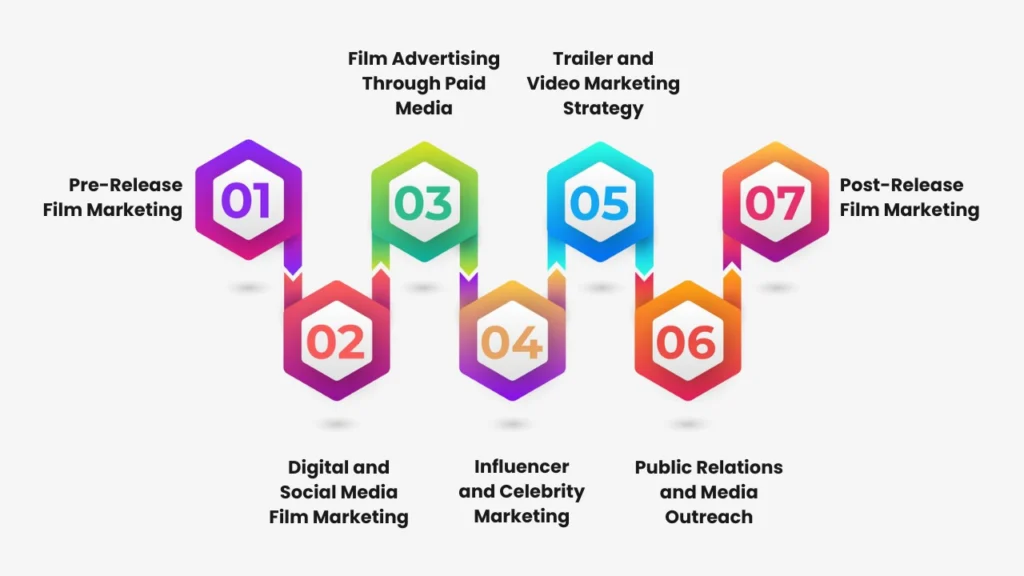
Types of Film Marketing Strategies
1. Pre-Release Film Marketing
Pre-release marketing lays the foundation for a successful launch. This phase focuses on curiosity, intrigue, and anticipation.
Key pre-release strategies include:
- Teaser posters and motion posters
- Teaser trailers and announcement videos
- First-look reveals of cast and characters
- Behind-the-scenes content
- Festival screenings and early press coverage
Strong pre-release film marketing strategies ensure the audience is already emotionally invested before the movie hits theaters or streaming platforms.
2. Digital and Social Media Film Marketing
Digital platforms are the backbone of modern film promotion and marketing. Social media allows direct interaction with audiences and enables content to go viral organically.
Popular digital film marketing techniques:
- Short-form videos (Reels, Shorts, TikTok clips)
- Meme marketing and trend participation
- Countdown posts and interactive stories
- Paid advertising on Instagram, YouTube, and Google
- Community engagement through comments and live sessions
Digital film advertising is cost-effective, measurable, and highly scalable—making it essential for films of all budgets.
3. Film Advertising Through Paid Media
Film advertising includes paid promotional activities designed to maximize reach in a short time.
Common film advertising channels:
- YouTube pre-roll and in-stream ads
- Social media sponsored posts
- OTT platform banner promotions
- Outdoor advertising (billboards, transit ads)
- Television and radio commercials
When combined with organic marketing, paid film advertising helps amplify visibility and reinforce brand recall.
4. Influencer and Celebrity Marketing
Influencers and creators act as trusted voices for niche audiences. Collaborating with them is one of the most effective modern film marketing strategies.
Examples include:
- Influencer reaction videos to trailers
- Review-based promotions
- Reels featuring dialogues or scenes
- Cast collaborations with creators
This form of film promotion and marketing feels authentic and often drives higher engagement than traditional ads.
5. Trailer and Video Marketing Strategy
Trailers are the heart of film marketing. A well-edited trailer can instantly define a movie’s tone, genre, and emotional appeal.
Effective trailer-based film marketing techniques include:
- Teaser trailer (30–60 seconds)
- Official theatrical trailer
- Character promos
- Regional or language-specific edits
- Platform-optimized cutdowns
Strategic timing and distribution of trailers are just as important as their content.
6. Public Relations and Media Outreach
PR builds credibility and trust, especially for content-driven or award-focused films.
PR-driven film marketing strategies include:
- Press releases and media kits
- Interviews with cast and crew
- Film critic screenings and reviews
- Podcast appearances and features
Positive media coverage strengthens film advertising efforts and influences audience perception.
7. Post-Release Film Marketing
Film promotion doesn’t end on release day. Post-release marketing helps sustain momentum and attract undecided viewers.
Post-release strategies include:
- Audience reaction videos
- Viral scenes and dialogue clips
- Social proof through reviews and ratings
- OTT launch promotions
- Extended cuts or bonus content
Many films achieve long-term success due to strong post-release film marketing techniques.
Film Marketing Strategies for OTT Platforms
With the rise of streaming, film promotion and marketing strategies must adapt to OTT audiences.
OTT-focused film marketing techniques include:
- Platform-optimized trailers and thumbnails
- Algorithm-friendly titles and descriptions
- Social media countdowns to OTT release
- Highlighting reviews and ratings
- Short clips optimized for mobile viewing
OTT film advertising focuses more on discovery, engagement, and repeat viewership than opening-day numbers.
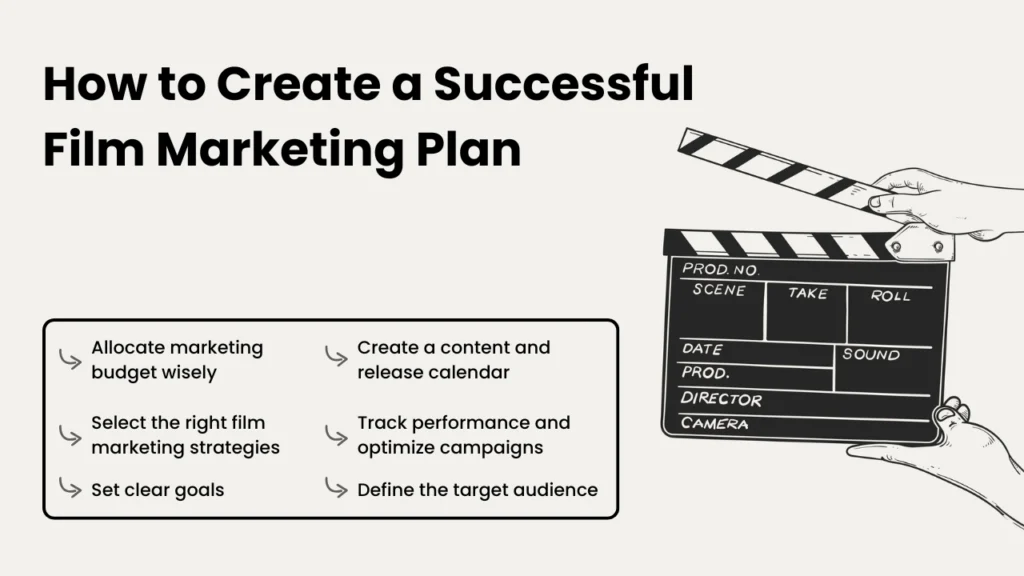
How to Create a Successful Film Marketing Plan
A well-structured marketing plan ensures consistency and efficiency.
Step-by-step approach:
- Define the target audience
- Set clear goals (awareness, sales, engagement)
- Allocate marketing budget wisely
- Select the right film marketing strategies
- Create a content and release calendar
- Track performance and optimize campaigns
Data-driven planning ensures that film advertising and promotional efforts deliver measurable results.
How Technology Strengthens Modern Film Marketing Strategies
Successful film marketing strategies don’t begin at release—they start much earlier, during planning and production. Today, filmmakers increasingly rely on digital tools to streamline workflows, improve creative consistency, and enhance film promotion and marketing outcomes. When used correctly, these tools directly influence how effectively a film is advertised, positioned, and received by audiences.
Visual Foundations That Support Film Advertising
One of the earliest influences on film marketing is visual planning. Using Location scouting software allows production teams to identify visually compelling locations that later become key assets in film advertising. Strong locations enhance posters, trailers, and promotional stills—making marketing visuals more authentic, cinematic, and emotionally engaging. These visual elements often become central to a film’s promotional identity.
Storyboard Planning for Consistent Film Promotion
Once the visual direction is defined, creating a storyboard for a marketing campaign ensures consistency across all promotional formats. Storyboards help marketing teams plan trailers, social media clips, paid advertisements, and platform-specific content with a unified creative vision. This approach strengthens film promotion and marketing by delivering a clear narrative across every audience touchpoint.
Budget Allocation That Improves Film Marketing Results
A detailed film budget breakdown plays a vital role in deciding how marketing resources are distributed. By clearly separating production costs and promotional spending, filmmakers can invest more strategically in high-impact film marketing techniques such as trailer production, influencer collaborations, and digital film advertising. Smart budget planning prevents overspending while maximizing marketing reach.
Script Development That Shapes Film Marketing Techniques
Strong storytelling is the foundation of every successful campaign. Tools like a movie script generator are increasingly used during early development to refine narratives and test creative directions. A well-structured script simplifies the creation of trailers, teasers, and promotional messaging, allowing film marketing techniques to align closely with the story’s emotional core.
Connecting Production Decisions With Film Promotion and Marketing
When production tools and marketing strategies work together, the result is a more cohesive and effective campaign. By integrating visual planning, AI storyboarding, budgeting, and script development early, filmmakers can create film marketing strategies that feel intentional, consistent, and audience-focused—bridging the gap between creative production and successful film promotion marketing.
Common Film Marketing Mistakes to Avoid
Even high-budget films can fail due to marketing missteps.
Avoid these common errors:
- Starting promotions too late
- Ignoring digital platforms
- Poor trailer storytelling
- Targeting the wrong audience
- Overloading audiences with repetitive ads
Balanced and well-timed film marketing strategies prevent fatigue and improve audience response.
Latest Trends in Film Marketing
The landscape of film promotion and marketing is constantly evolving.
Current trends include:
- AI-powered audience targeting
- Short-form video dominance
- Interactive campaigns and AR filters
- Community-driven promotions
- Data-based creative testing
Staying updated with these trends helps filmmakers stay competitive and relevant.
FAQs for Film Marketing Strategies
What are film marketing strategies?
Film marketing strategies are planned promotional methods used to create awareness, attract audiences, and increase a film’s box office or streaming performance.
What are the most effective film marketing techniques?
The most effective film marketing techniques include digital promotion, social media campaigns, influencer marketing, trailer optimization, and targeted film advertising.
How do film promotion and marketing work?
Film promotion and marketing work by building pre-release buzz, driving launch-day attention, and sustaining interest through digital content, advertising, and audience engagement.
Why is film marketing important?
Film marketing is important because it helps films reach the right audience, stand out in competition, and convert awareness into ticket sales or streaming views.
How early should film marketing start?
Film marketing should start during pre-production or early post-production to plan trailers, promotional content, and advertising timelines effectively.
What is film advertising?
Film advertising refers to paid promotions such as social media ads, YouTube ads, OTT banners, TV commercials, and outdoor advertising to increase a film’s visibility.
Is digital marketing necessary for film promotion?
Yes, digital marketing is necessary for film promotion because it offers targeted reach, real-time engagement, measurable results, and cost-effective advertising options.
How much does film marketing cost?
Film marketing costs vary widely depending on the film’s scale, audience, and platforms, ranging from low-budget digital campaigns to large global promotions.
What are common film marketing mistakes?
Common film marketing mistakes include late promotions, weak trailers, poor audience targeting, ignoring digital platforms, and unbalanced advertising spend.
How do OTT platforms market films?
OTT platforms market films using algorithm-optimized trailers, social media promotions, influencer reviews, platform banners, and short-form video content.
Can low-budget films succeed with marketing?
Yes, low-budget films can succeed by using smart film marketing techniques like niche targeting, social media promotion, and creative digital film advertising.
What trends are shaping modern film marketing?
Modern film marketing trends include short-form video dominance, AI-driven targeting, influencer-led campaigns, and data-based creative optimization.

